
Those Poor Schools
The destitute and impoverished schools desperately need more money.

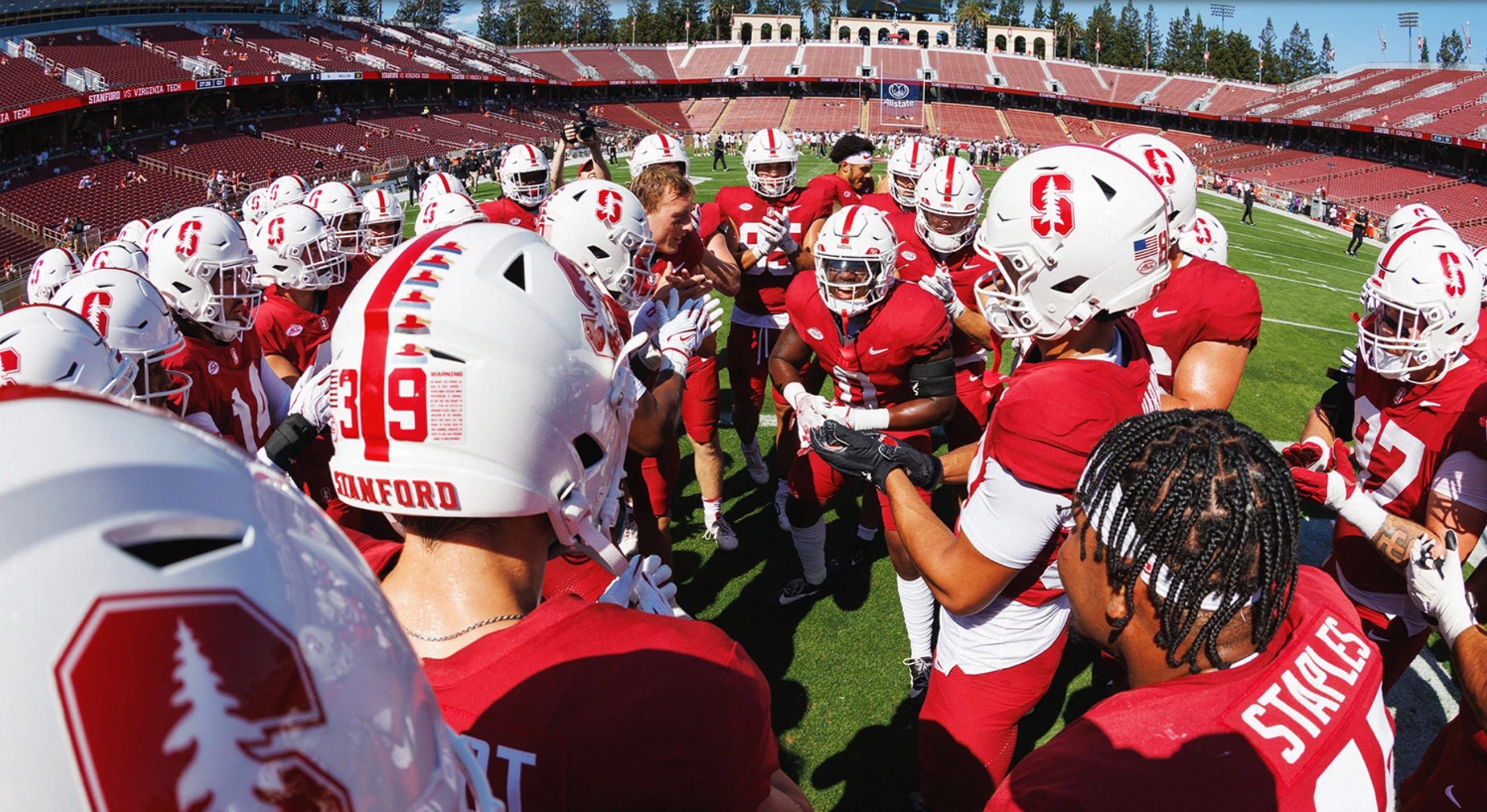
The Power Four schools are at risk of shuttering their doors given the gaping hole that revenue sharing is placing in their budgets.
The average Power Four endowment is over $1 billion. National Association of College and University Business Officers reports returns on endowment investments across 657 schools as plummeting from 11.2% in FY ‘24 to 10.9% in FY ‘25.
How are they ever going to be able to pay the athletes?
An ~11% return on endowments for P4 schools means an average yearly investment income of over $100 million. Surely $20.5 million can’t be sustained.
Moreover, schools like Stanford University ($37B), University of Notre Dame ($17B), and Northwestern University ($14B) are especially sensitive to the hit taken to their athletic departments and university financials.
Stanford, especially strapped for cash, tried hard to cut sports, but their alumni community revolted. Obviously, they’re in desperate need of financial relief. That must explain why Stanford has identified more with its academic strengths than athletic ones as of late.
Let’s all pray for Stanford to get the influx of capital they need to support their programs appropriately.
Stanford and Northwestern athletic departments both had to transition leadership, as the financial constraints were undoubtedly just too daunting for any one person to manage. Certainly the costs of capital improvements and coaching salaries will come down as the schools continue to spend more prudently, with all of their brainpower, to play moneyball like so many have done successfully in this NIL era.
And kudos to the National Collegiate Athletic Association for certainly planning to take care of their students with complimentary financial literacy. I know it’s coming any day now. I just know it.
Jed Collins, a former NFLer and Washington State Cougars fullback, has My Money Vehicle, a financial literacy tool receiving funding from state governments, players associations, and others. If only the NCAA could afford the relatively paltry sum for his engaging online curriculum.
The consulting bills and legal challenges unfortunately aren’t allowing for investment in financial literacy. But I know that once the current set of legal challenges are behind the NCAA, they will finally equip their student-athletes with the resources typically provided so generously.
The NCAA is rushing to the rescue. They are surely going to address the mental health concerns plaguing many athletes as the financial toll rises during these desperate times.
This study indicates that suicide rates among college athletes have doubled in the most recent decade compared to the one prior. If only someone could build skills, resources, and education around NIL. But they can’t, so the NCAA is forced to just do its best.
If only there were a company that could help. But they probably wouldn’t have connections to school leaders of any repute. Almost certainly not.
Thank goodness we had our knight in shining armor sprint to the rescue.
Ohio State University president Ted Carter said that this current revenue-sharing and NIL universe is not sustainable. He might be talking about the $20.5 million expense against roughly $900 million generated in investment income last year. That’s hard to stomach.
He did say:
“There’s only about five schools in the country that can play at this level right now in terms of NIL. Fortunately we’re one of them. But even at that level especially, we want to field a really good men’s basketball team, a women’s basketball team, and compete in other sports like ice hockey. It’s not sustainable. Something’s going to have to give.”
That screams unsustainable.
You know what else isn’t sustainable? Servicing so many sports like Ohio State does.
President Carter also said:
“And our brand matters, not only the most recognizable brand, but the most powerful athletic D1 sports program in the country. I mean 36 Division I sports. Nobody else is doing that except for Navy and Stanford at 35. So I love our brand. I want to protect it.”
Completely not sustainable.
Ohio State can’t possibly be one of the three schools supporting so many sports. And one of only five schools resourcing sports with as much NIL support as they are. Completely unsustainable to be the only school supporting as many sports with as much money as they are.
Can’t afford $20 million. And certainly not $90 million. Because the $90 million doesn’t return revenue on that income. Surely they won’t see revenues jump $55 million again like they did last year.
Completely unsustainable.
What is sustainable, however — and mostly because everyone continues to do it — is athletic director buyouts and head coach buyouts.
The fine folks at Louisiana State University, who take winning more seriously than anyone, have the athletic director, Scott Woodward, owed over $6 million in buyout money, and the head coach, Brian Kelly, owed $54 million.
Very sustainable.
Head coach salaries rising is sustainable, too. Lane Kiffin is making $13 million a year as a head football coach, with more layered in through bonuses and escalators.
Football coaches alone have been owed over $1 billion in severance payments since 2015, and over $220 million last year alone.
Very sustainable.
Everyone outraged at NIL while ignoring the coach compensation debacle is much like everyone outraged at Jeffrey Epstein while the distinguished list of co-conspirators deserve equal or greater attention.
If you can’t see it for yourself, I don’t know what to tell you.