
Moving Goalposts
Competing authorities, unclear rules, and an increasingly fragile model

The NCAA recently won an eligibility lawsuit against a Nevada baseball player who received an injunction to be able to play this year. Congratulations, NCAA.
After spending $16M on 60+ eligibility lawsuits, you have now deprived roughly 40 athletes of the opportunity to play another season—and in some cases, even hijacked their season while they’re playing. Now that’s what I call a win.
Lots of “action” has been taken recently, but it’s only action that precedes other potential action. If this, then that. Contingencies for contingencies.
Will the CSC take action? What are the consequences for behaving ethically? What are the consequences for behaving unethically?
There is a proposed limit being placed on the age a student-athlete can be (no older than 24). There’s also a reset being planned for the eligibility window (five years of eligibility).
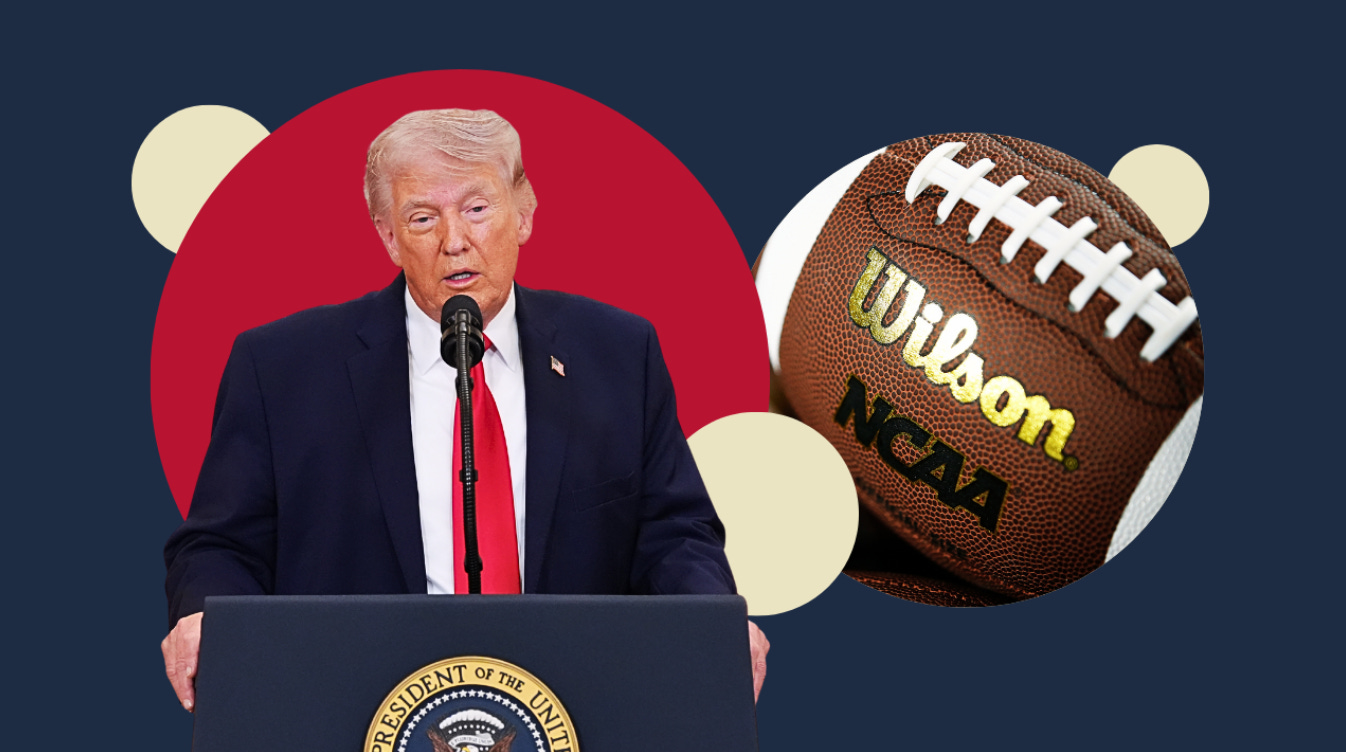
But these things are all temporary guideposts. With the NCAA being the governing body, the CSC being the enforcement body, and the President of the United States intervening, there are competing forces pushing upon the future direction of college athletics competition.
The point that I must revisit is that none of these organizations is bigger than federal law—not even the President of the United States.
So while he has an executive order in place, and federally funded institutions would be keen to fall in line with his direction, no school should hold too tightly to its plans or to the current state of affairs.
Now is as good a time as any for me to reiterate that I believe the current compensation model likely is in violation of federal Title IX, which is designed to provide equal access to opportunity to both genders.
After decades of equally resourcing men and women on college campuses—with money, support, and institutional backing—male athletes are now receiving ~95% of revenue sharing from the same schools that were mostly dividing support equally on the basis of gender.
Additionally, I believe that the compensation structure for international student-athletes who are not on the more expensive O-1 or P-1 visas, and who instead are on F-1 student visas, significantly compromises their future eligibility for citizenship in the United States.
The current United States governmental leadership has shown itself to be hyper-vigilant in preserving Anglo-Saxon white dominance and United States excellence within its own borders, even at some significant short-term detriment to itself.
The existing revenue-sharing compensation terms for international athletes seem to fly in the face of student visa provisions, which place significant limitations on earning potential and revenue creation for international students.
Again, if international students were able to earn money as independent contractors in service of the school in a capacity that earned them $100,000+, don’t you think they would have done so previously?
The final of my three largest concerns related to the current NIL/revenue-sharing compensation landscape is that the NCAA is operating as a monopoly—dictating who competes, how they compete, and, most importantly, what they are capable of getting paid.
Why would the House Settlement create an impermissible compensation climate?
Because the House Settlement wasn’t trying to create a future employment model, structure, or market. It was simply attempting to retroactively pay athletes and provide a pathway to paying athletes going forward under mutually agreed-upon terms by the NCAA and the representatives said to be representing the athletes—who were much more concerned with getting their paws on $700+ million in class action legal fees.
In class action lawsuits, it’s not like the lawyers or the affected class are trying to shape the future. They are mostly just trying to avoid the past repeating itself while securing some form of compensation for themselves.
Furthermore, the judge isn’t trying to remedy past transgressions and create the best possible environment for student-athlete compensation going forward. The legal system isn’t keen on taking a crack at solving many issues at once.
On the contrary, Judge Wilken, who was tasked with resolving the ongoing legal matter between athletes and the NCAA related to compensation, was only trying to tightly accomplish the mission that was her charge.
Judge Wilken even remarked that people don’t much like having things taken away from them that were previously afforded to them—namely unlimited compensation, which was compromised with the House Settlement revenue-sharing cap.
With how much scrutiny has been placed upon the financial operations of college athletics, I’m guessing that there is a reasonable chance that we are in for the privatization of college basketball and/or college football, based on the economics of it, through private equity.
The amount of money available—by excluding the NCAA and strategically monetizing the available assets and inventory—is likely larger than most people recognize.
Whether or not anyone wants to take on the sizable burden of trailblazing a new competition league to replace a useful but declining gargantuan is another subject altogether.
With all of the legal fees, lobbyist payments, executive compensation, and unnecessary friction introduced to organized competition, the apprehension of defecting for Power 4 schools is approaching all-time lows.
However, school presidents have long been averse to doing anything proactive, as evidenced by Pac-12 schools mostly going down with the ship—setting their athletic departments back for a decade or more by way of financial imprudence.
It’s hard for managers and lifelong academics to suddenly become pioneers and innovators. Their risk profiles don’t fit, and the personality of most school leaders doesn’t lend itself to thrusting the institution into uncertainty—regardless of the upside and riches that may await.
How much longer will the NCAA’s deficient leadership, wasteful spending, and negligence in effectively enforcing the rules it puts in place be allowed to preside over an undervalued asset like American college athletics—an undertapped treasure trove?
Enforcement, governance, and law are not on the same page in the world of collegiate athletics.