
Monetizing Athletes
How athlete-centric strategy can unlock earning potential for athletes and schools

I worked at a fundraising company that has raised roughly $1 billion for teams, groups, and clubs in the past decade, primarily for high school teams, groups, and clubs. The core tenet of the fundraising was that if you could get a student to input 20 e-mail addresses for friends and family they knew, that participant would, on average, generate roughly $200 for their fundraiser. If you do that across a 10-person golf team, it’s $2,000. You do that across a 50-person football team, that’s $10,000. It’s kind of the minimum you would settle for if you weren’t an exceptional leader who demanded—and received—more from their players. If your athletes put in 20 e-mail addresses, the system would deliver automated fundraising solicitations on behalf of the athlete; 10 e-mails would get opened, which would generate 3.5 donations on average at roughly $60 per donation. The moral of the story: Athletes who perform the right behavior will generate good results that benefit the program.
Perhaps a more NIL-related reference: Dale Earnhardt, aka “The Intimidator,” had a special-edition automobile created with about 8,000 vehicles made in total. Die-hard NASCAR or Dale Earnhardt fans would undoubtedly have been flocking to purchase the vehicle. For Dale Earnhardt—much like how it was once said about Austin Powers—“women wanted him, men wanted to be him.” He’s him. But Power 4 schools struggling to fund their NIL operations need to blend the forced solicitation of fundraising from the first paragraph with the star-power of this paragraph to start drumming up additional NIL revenue for their athletes.
I had a menu item named after me at The Brown Jug. It was a turkey burger. Quality, reliable, not flashy—kinda like my athletic career. And owner/operator Perry Porikos is a University of Michigan institution dating back to before The Fab Five. So he recognized that, to engrain himself even further as a beloved figure in Michigan pop culture, he could fully embrace his campus audience by naming menu items for players past and present. For the record, I don’t mind having been replaced on the menu by legendary Michigan Hockey Coach Red Berenson. And who isn’t getting the Tom Brady Gyro Sandwich!?!?
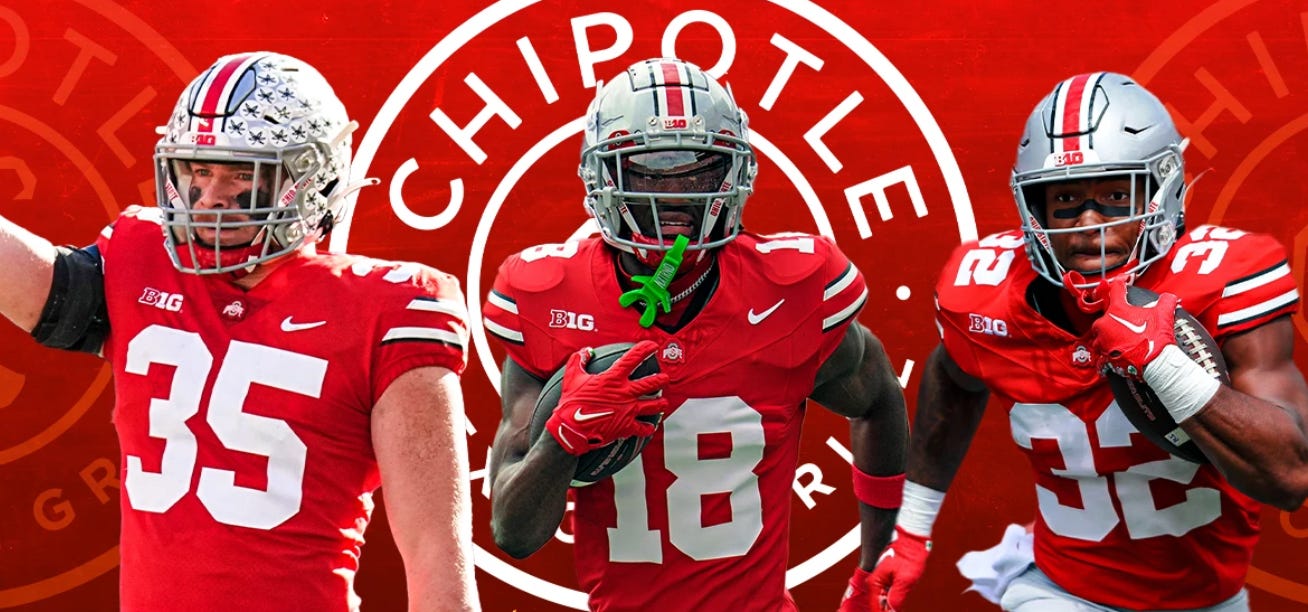
But think more broadly. Discount codes with player names and jersey numbers; special-edition menu items or apparel; restaurant eating competitions trying to top other athletes, etc. That’s all basic. But what about LSU-purple Gatorade sold in stores with athletes like Livvy Dunne, Paul Skenes, and Garrett Nussmeier on the wrapper? Nonstop flights into Columbus’s John Glenn International Airport (Ohio State) from San Diego (hometown of OSU QB Julian Sayin) could pay homage and NIL for celebrating the tenth row or flights on the tenth day of the month (Sayin wears #10). The internal athletic-department marketing-agency model needs to gain velocity and traction because the deals are easy to do and it allows athletes to further entrench themselves in the university community, in the state, and within the team where they sit currently. It’s harder to leave someone who likes you more.
The hometown discount might exist for athletes desiring to play closer to home or inside a familiar program. But it would exist more vividly if every restaurant you went to liked you, had your name on the menu, and comped your food (maybe in exchange for signatures or social-media posts). Same goes for barber shops, salons, yoga studios, etc. I say all of this to illustrate that the value of athlete promotion typically far outweighs the cost of payment. And in the event that there is a high-cost arrangement to compensate an athlete for the use of their NIL, GOOD! Outside NIL is uncapped, and if a school can receive deal attribution, they can theoretically lower their own rev-share number. Schools can easily sublicense the use of athlete NIL to vendors who sign sponsorship deals where a portion of the deal(s) goes to athletes (which is becoming more and more common in the P4).
I love kettle corn. It’s my favorite vegetable. Don’t even try me on that one. So why wouldn’t the stadium sell the [insert name] [insert food item] in concessions? A hot dog is so uninspiring. The “Carson Beck Hurricane Hot Dog” has a much better ring to it. The “J.T. Rogan Is Kinda Kettle Corn-y” would sell like hotcakes, even if it required me buying all of the bags. I’m sorry that this article devolved into this. Where were we?
I don’t think we have a full appreciation for just how passionate the college-athletics fan base is and how motivated they are to spend their money in support of their program and its athletes. If one P4 Top-25 men’s basketball program jersey patch could fetch ~$1.2 million like I was told recently, then what other obvious and active revenue dollars are schools and programs leaving on the table to their own detriment?