
Hypotheticals Abound
Many opinions exist about the current and future state of affairs.

I saw a Twitter/X thread from a prominent college basketball agent, Daniel Poneman, who has experienced a massive increase in representation volume due to the transfer portal. Dan is an acquaintance, and I’ve had conversations with him, listened to him on panels and podcasts, and he never lacks conviction in his outlook. His thread earlier this week asserted that a hard revenue-sharing cap has increased the volume of transfers. Then respected legal mind Mit Winter shared his thoughts on the matter and endorsed Poneman’s opinion, saying that players are “sometimes forced to move on because there’s no cap space.” I allow that this reality is certainly possible, but I don’t know that departures are necessarily any more likely with a rev-share cap than without one. This got me thinking about the hypotheticals and assumptions that may be bogging down future planning for schools and programs. So we’ll explore more.
Poneman’s claim was that the revenue-sharing cap forces programs to move on from players. It’s important to note that there has not yet been a transfer portal cycle with a revenue-sharing cap in place, nor a full season of competition conducted under such a system, so any supposition is essentially forward-looking. But schools all over the country are also paying amounts above the cap with relative ease. LSU and other schools are even courting new coaches with the promise of having amounts to spend on their rosters that far exceed the publicly acknowledged revenue-sharing cap. Poneman, ever the advocate for improved athlete treatment and maximal payment, is likely advocating for the removal of the cap. And my argument is that with no revenue-sharing cap, the programs most willing—and with the most money—are still going to be the ones that secure the best talent. Where there is a will, there is a pay.
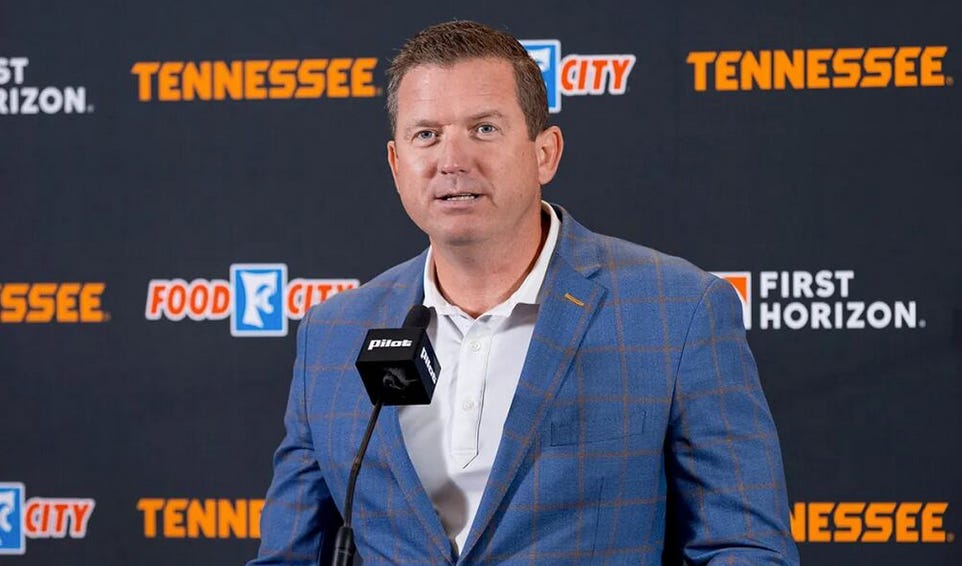
Tennessee athletic director Danny White and other Division I athletic directors are advocating for collective bargaining to reduce friction in the negotiation, retention, and recruitment process for schools. To some, it might feel inevitable, but collective bargaining for college students requires a complex untangling of conditions that justify athlete-students being classified as independent contractors, alongside other conditions where employment-like standards are more easily met. While collective bargaining would be a simple remedy in theory, the consequences of arriving at such a decision would have collateral damage that can’t be ignored. How does Title IX get impacted? Do athletes unlock more usable hours in the week for athletics? Do academics even matter anymore? If LSU football players didn’t go to class, but instead spent 15 hours a week—the time they would ordinarily spend in class—out in the community engaging with fans and supporting university initiatives (hospital systems, fundraising campaigns, sponsorship activations, etc.), would anyone care?
The other side of this athlete advocacy is, of course, the antitrust exemption being sought by the NCAA. The NCAA is trying to receive carte blanche from the federal government to allow it to continue imposing the most restrictive terms on athletes possible. This movement can’t be ignored, partially because of the volume of politicians and media personalities expressing disdain for the current state of affairs. I don’t advise looking at the present moment to set decades-long expectations for the future. I have three kids under the age of six. My life will not forever (hopefully) experience the type of chaos and lawlessness that exists now. Things will change, conditions will soften, and I’ll at least be negotiating with children who are a bit more grounded in life experience. So for college athletics, planning for the future based on four and a half years of information involving paying players—but with only six months of schools actually being able to pay players—one can’t possibly make any concrete or swift decisions on such limited insight.
What would I do?
Free the university of the heavy burden of solely funding sports that don’t turn a profit by calling on state and federal governments, along with Olympic organizations, to run better programs. There’s nothing wrong with having them earn their keep either. Go to school for a degree, or earn your opportunity to compete at a school with world-class facilities, resources, and competition by serving 15 hours a week in the university community.
Establish a conference-specific revenue-sharing cap instead of a Power Four–wide one. These conferences have different bottom lines and revenue intakes. Why treat them all with a “one size fits few” rev-share cap? I present the top European soccer league in each country as an example. Soccer teams all pay differently on a country-by-country basis, and even on a league-by-league, team-specific basis. And they eventually play each other in a Champions League tournament.
It almost feels like we’re not trying to take examples from existing resources that have been operationally successful for decades. Instead, the college athletics powers that be are banging their heads against a wall trying to figure out postseason formats, scheduling formats, eligibility rules, etc., where it’s all just bogus. When Miami (FL) had a tight end play a ninth year, you knew the rules didn’t work. When FCS, D2, D3, and NAIA all had playoffs but D1 FBS didn’t, you knew something was off.
It’s just a shame that actions creating immediate benefit for athletes can’t be swiftly enacted or agreed upon. We agree to pay athletes, but because Rutgers has paltry athletic revenues, Ohio State’s teams and elite players have to perform above-the-cap NIL earnings—or become professional jumpers-through-hoops—to ensure they violate the cap only in spirit, not in technicality. We need a new model, but the wrong people are leading the charge.