
Coaches Rule
How coaches invented and maintain the most preferential transfer terms

The new head coach for the UCF women’s basketball team, Gabe Lazo, came from LSU, where he was the associate head coach—for 5 days. Prior to that, he was at Tennessee for two years, Mississippi State for two years, George Washington for one year, Stony Brook for two years, and FIU for two years. In 2025, Lazo was ranked as the top recruiter in the country.
Imagine going somewhere because he recruited you there, and then, almost like clockwork, he’s gone.
The coaching industry has always been about upward movement. Coaches change jobs all the time, and not just for head coaching opportunities.
One of my coaches, Tim Drevno, boasts employment at 13 schools in 35 years—a list which includes a university that no longer has a football program (Cal State Fullerton).
How can a coach achieve a better role, with more pay and more responsibility, to get closer to their next (hopefully better) opportunity?
Many of these coaches in the sport of basketball, represented by commission-hungry agents, descended upon their respective Final Four host cities last week.
Nate Oats dined on complimentary lobster, prime rib, and an open bar in the same room as a coach who had accepted his 3rd head coaching job in two years, Will Wade (McNeese, NC State, LSU).
Of course, their shared agency (CAA) would host an enormous party for these titans of the industry, as both Oats and Wade leveraged anxiety about the current state of basketball affairs for more money and better opportunity—Oats to stay, Wade to leave NC State for LSU.
Many people talk about how bad agents are for college athletes, but can they truly be more harmful to players than coaches’ agents are to the industry?
There always seems to be more money for a buyout, or to extend a coach like Oats, who signed an extension in 2024 to stay at Alabama. He also received a $500,000 contract escalator bump in pay less than a month ago.
When is enough enough?
Furthermore, the obvious question is: how much of that money is returned if results begin to head in the opposite direction? I’ll let you guess on that one.
Schools are spending so much money on buyouts, contract extensions, and early termination payments (over $1 billion in the last 12 years across college football alone) that it is getting even harder to balk at paying athletes ~$21.5 million per year after the modest increase expected heading into the 2026–2027 school year.
Agents are indeed charging athletes 10–20% (spoiler alert: by some of the very same big-time agencies extracting more money from programs on behalf of their coaches).
There is outcry about how agents are taking advantage of athletes, but no one feels bad for the universities that are absolutely getting leveraged.
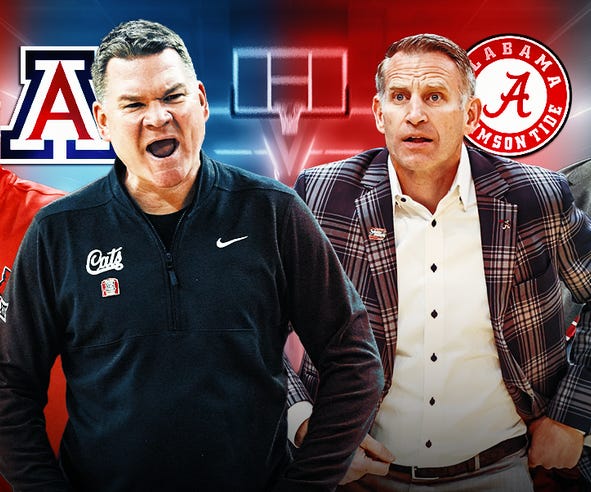
“Hey, North Carolina needs a coach.” Then all of a sudden, Nate Oats, Tommy Lloyd, and others renegotiate contract terms to stay where they are because, generally, “they are really happy where they’re at.”
If you were truly happy, why would you be squeezing your employer for more money not to leave? Coincidental timing for someone who is so happy to be somewhere.
Why then are players being vilified for leaving a school or wanting more money?
So much can change around a program from year to year—coaches change, players change, personal situations change, etc.—that if making a four-year commitment to a university is mandated for a player, why shouldn’t it be the same for a coach?
Worse yet, the Executive Order brought forward by President Trump can’t withstand legal challenges with regard to the movement of athletes.
What it does do, however, is introduce more friction into the transfer process for athletes who already don’t know how to navigate it (partially because it changes all the time), and some of whom can’t afford to compromise their current opportunity to potentially secure another one.
When an athlete enters the transfer portal, the school can drag its feet, taking as much as 48 hours to formally process the athlete’s intention. The school can then cut the athlete off from all training, access to team facilities, rehabilitation, etc.
With the recent addition of brutally stiff tampering/poaching penalties in place, it becomes even harder to secure an opportunity at a different school.
If you care to go down the rabbit hole, precedent doesn’t bode well for the longevity of these athlete restrictions, see more here.
I’m not railing against the college system or how deserving athletes are of more money.
I’m mostly trying to stand up for the athlete who is villainized, while pointing out that quite often the harsh conclusions being drawn about athlete movement, payment, and entitlement are only a fraction of a much broader industry dynamic—one in which the athletes are a relatively small financial piece despite being the crucial component that makes the entire college athletics engine go.
Coaches leverage. Players transfer. Only one gets called greedy.
Ding-ding-ding-ding. I made this argument when NIL came into existence in 2021. At that point, we didn't even know what the transfer portal would bring. The argument remains the same, however. Until you reign in coaches' terms and salaries, don't touch athletes' freedoms -- or, as we've witnessed so often -- see you in court.